What is saddle nose deformity? Are there other kinds of nose deformity caused by syphilis? These questions will be answered in this article and the before and after picture of saddle nose deformity demonstrated.
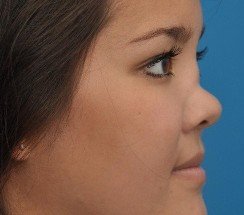
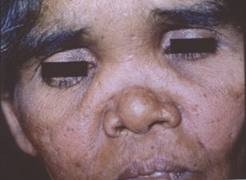
Saddle type of a nose is a condition characterized by height loss in the nose usually caused by collapse of the bridge. This condition is usually evident in people with leprosy, nasal trauma, cocaine abuse, congenital syphilis and relapsing polychondritis.
A person with such a nose usually has a depressed nasal dorsum, which often involves, cartilaginous, bony or both cartilaginous components of the dorsum. The main causes are explored in this article as well as pictures of saddle nose deformity and syphilis provided. If you have it, it can be corrected with rhinoplasty a procedure done by cosmetic surgeons.
Saddle Nose Deformity
In the middle of the human nose, there is a cartilage, which functions to support the nose. When this support is weakened, the nose becomes ‘saddled’ in the middle and this is the saddle nose deformity. There are many names used to describe this condition as pug nose and boxer’s nose. The nose evidently requires a septal support for it to stay upright all the time.
Cocaine addiction is one of the many causes of this deformity. Cocaine acts as a hindrance to blood flow through the nose. It therefore causes vasoconstriction by tightening blood vessels in the nasal area. The result is the collapse of septal cartilage because there is not enough blood nourishment to the nose. On the other hand, trauma can also cause a saddle nose deformity by creating a rare condition well known as septal hematoma.
This can also happen when trauma fractures the septal cartilage or septal bone directly. Hematoma simply means a collection of blood. When this happens in the nose, a correction procedure creates a hole in the septal bone because there is little or no blood reaching the bone for nourishment. When the septum continue to weaken, the nose is likely to collapse.
Another cause of the is an overly aggressive rhinoplasty. Some surgeons performing rhinoplasty may not be cautious enough thereby tampering with the septal support. Therefore, rhinoplasty requires precision and skillfulness to ensure there is no destruction to the airway. There are safe septoplasty maneuvers that will not cause any harm if used properly during rhinoplasty.
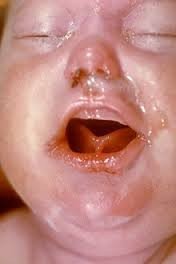
Late congenital syphilis also cause this deformity. An unborn child in the womb contracts this type of syphilis from the mother suffering from this infection. If syphilis is not treated in newborn babies, it exhibits itself in adults with signs of deafness, blunted teeth, (incisors), swollen knees and saddle nose syphilis.
Saddle Nose Surgery or Rhinoplasty

Reconstruction of the septal cartilage is the ultimate treatment of the saddle nose deformity. For the cartilage to function well it has to have good support for the overlying nasal weight. If unattended can also result in septal perforation. This condition can however be addressed depending on the size, orientation and location of the most affected part.
To improve contour of the nose after having this deformity there are two grafting to choose from; auricular cartilage grafting and costal cartilage grafting. These two are usually applied differently depending on the stage or level of the deformity. The grafting requires saddle nose surgery.
The first saddle nose rhinoplasty is accredited to John Orlando and dates back to 1887. Other pioneers of this rhinoplasty are Robert F. Weir and Jacques Joseph. The pug nose rhinoplasty has continued to develop from what these great surgeons contributed. Today’s technology uses implants to uplift the shrunken bridge. The selection of the implants is significant since it stays inside the body for a long time. Therefore, they must pass this test:
- They should not have carcinogens
- The skin must absorb them easily
- They should not have extrusion rate
- Should be price worthy
- They should feel like actual cartilage
- Should be easy to use and implant in the nose
- Rhinoplasty from implants should also not cause inflammation
There are different kinds of implants, the best being determined by each case of deformity.
Saddle Nose Deformity Pictures and Saddle Nose
Syphilis
To help you get a clear understanding of this deformity, these pictures should be able to help you. Saddle nose syphilis is found in adults who got it from their mothers while they were still in the womb. This is usually a second class of syphilis since the first kind is detectable during prenatal care and treated with antibiotics. Mothers should be thoroughly screened during pregnancy to treat any signs of syphilis as it can lead to major complications in the baby and adult.
Suggested Further Reading:
- Owen Wilson Nose Story – What Happened to His Broken Nose?
- Who Has a Big Nose – Celebs, Models, Women and Actresses
- Greek Nose – Meaning, Women, Personality & Pictures
- Ugly Nose Shape – Meaning, Pictures, Shapes & Celebrities
- Bulbous Nose Tip, Pictures, Rhinoplasty and Nose Job
- Asian Nose Job, Bridge, Surgery and Before and After
- Wide Nose – Meaning, Wide Nose Surgery and Job
- Flat Nose Meaning, Surgery and Makeup
- Crooked Nose Meaning, Causes, Celebs, Rhinoplasty & How to Fix It